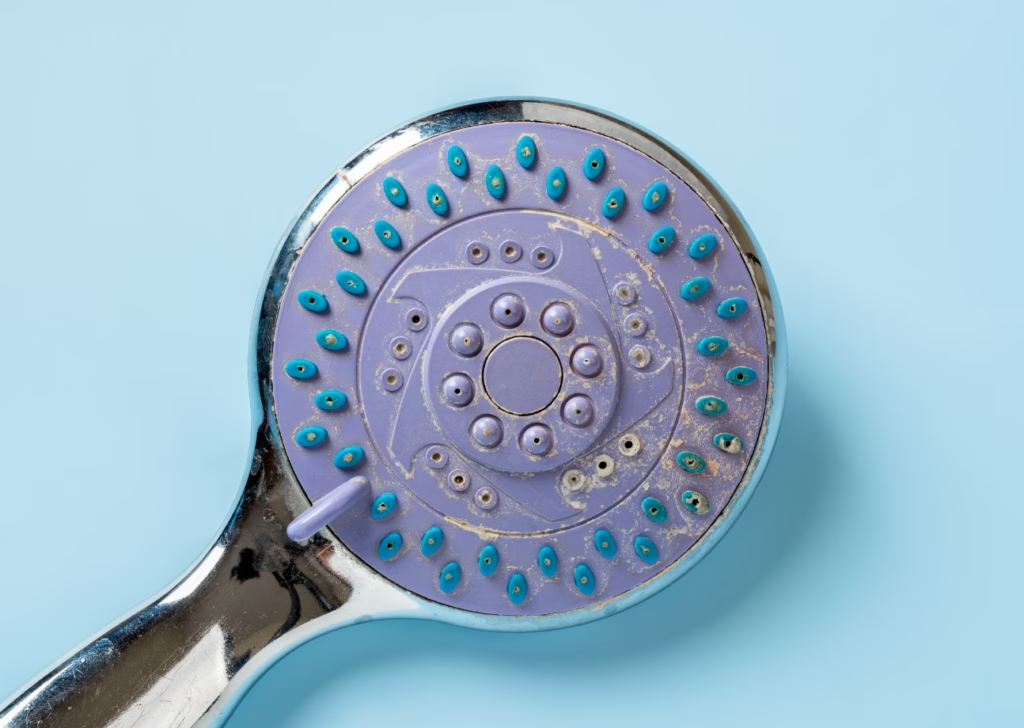
If you’re on city water or a private well, chances are you’re dealing with hard water. Some homeowners notice it right away. Others don’t realize what’s going on until they’re scrubbing the shower nonstop, replacing a water heater early, or wondering why their skin feels dry no matter what soap they use.
Hard water isn’t dangerous to drink, but it does wear your home down over time. It also costs you more than most people think. The good news is that it’s fixable, and once it’s handled correctly, the difference is night and day.
Here’s what hard water looks like in real life, why it’s so common in Waukesha County, and what we recommend for a long-term fix.
What hard water actually is
Hard water is water with high levels of dissolved minerals, mainly calcium and magnesium. Those minerals are naturally found in southeast Wisconsin groundwater. Whether your water comes from a municipal source or a private well, those minerals often come along with it.
You may not see hard water right away, but you’ll definitely feel it and see the effects over time.
Signs you’ve got hard water
Most Waukesha County homes with hard water have several of these symptoms:
Around the house
- White spots on dishes and glassware
- Soap scum that sticks to showers, tubs, and sinks
- Cloudy-looking faucets and fixtures
- A toilet ring that keeps coming back no matter how much you clean it
On your body
- Dry or itchy skin after showering
- Hair that feels heavy, dull, or “waxy”
- Soap and shampoo that don’t lather well
- Clothes that feel stiff or fade faster than they should
In your plumbing and appliances
- Scale buildup on showerheads and inside faucets
- Water heaters that wear out early
- Dishwashers and washing machines that struggle or fail sooner
- Lower water pressure over time from mineral buildup in the pipes
If you’re seeing even a few of these, hard water is almost always part of the problem.
What hard water is costing you
Hard water doesn’t just make things harder to clean, it quietly eats away at your home.
Here’s where the cost shows up:
- You use more soap, shampoo, and detergent because it doesn’t rinse clean
- Appliances burn more energy because scale coats heating elements
- Water heaters, dishwashers, washing machines, coffee makers, and humidifiers don’t last as long
- You spend more time and money on cleaners, descalers, and repairs
Most homeowners don’t realize how much hard water is costing them until something expensive breaks earlier than it should.
The best way to fix hard water in Waukesha County
If you want to actually remove hardness minerals, you need a true water softener. That’s the only system that takes calcium and magnesium out of the water.
A softener works by exchanging those hardness minerals for sodium (or potassium), so scale stops building up in your pipes and appliances.
Once a softener is working properly, you’ll notice:
- Soap lathers and rinses like it should
- Skin and hair feel cleaner and less dry
- Spots and soap scum drop way down
- Appliances run better and last longer
What about saltless conditioners?
Saltless systems can help reduce scale in certain situations, but they do not remove hardness minerals. In Waukesha County, where hardness levels are often higher, saltless units usually don’t give homeowners the full result they’re expecting.
That’s why we don’t recommend one until we’ve tested your water.
Why system size matters
This is a big one. A softener isn’t something you want to guess on.
The right system depends on:
- your hardness level
- how many people live in the home
- daily water use
- whether iron is present (common with wells in this area)
If the softener is undersized, it regenerates too often and wears out faster. If it’s oversized, you spend more than you need to. A quick water test makes sure you land on the right system for your house.
What to do next
If you’re tired of fighting hard water, the fastest path to a real solution is simple:
Test your water, then size the right softener for your home.
That way, you’re not guessing, and you’re not buying equipment that doesn’t match what’s actually in your water.
Schedule a free Water Doctors water test.
We’ll measure your hardness (and iron if you’re on a well), explain the results in plain terms, and recommend the best long-term fix for your home.
Common in Waukesha County and nearby areas
Hard water is a regular issue throughout Waukesha County and surrounding counties because of how mineral-heavy our local groundwater is.
We see the most consistent hard water complaints in homes across:
Brookfield, Muskego, Menomonee Falls, New Berlin, Pewaukee, Waukesha, Oconomowoc, Hartland, Delafield, Sussex, Merton, Dousman, and Lake Country.
We also run into the same hardness levels in nearby parts of Jefferson, Racine, Walworth, and Washington Counties.
If you’re in any of these areas and dealing with spots, buildup, dry skin, or scale problems, hard water is almost certainly the cause.
Frequently Asked Questions
How hard is the water in Waukesha County?
It varies by neighborhood and whether you’re on city water or a private well, but Waukesha County is known for moderate to very hard water. The only way to know your exact hardness level is to test it, and that number is what determines the correct system size.
Is hard water safe to drink?
Yes. Hard water minerals like calcium and magnesium are not harmful to drink. The problem is not what hard water does to you, it is what it does to your home. Over time those minerals build up in your plumbing, appliances, and even on your skin and hair, and that is where the real trouble starts.
Will a water softener increase sodium in my water?
A softener adds a small amount of sodium as it removes hardness minerals. For most people it isn’t a concern. If you’re on a sodium-restricted diet, we can set up reverse osmosis for drinking water or use potassium instead of sodium.
Why do I still get spots even with a softener?
Most of the time it comes down to one of three things:
- the softener isn’t sized correctly
- it needs adjustment or service
- iron or other minerals are also present
A quick test and system check tells us which one it is.
Should I choose a softener or a saltless conditioner?
In Waukesha County, a softener is usually the right solution because it actually removes hardness minerals. Saltless systems can reduce scale but won’t give you true soft water. If you’re unsure, a water test makes the decision easy.